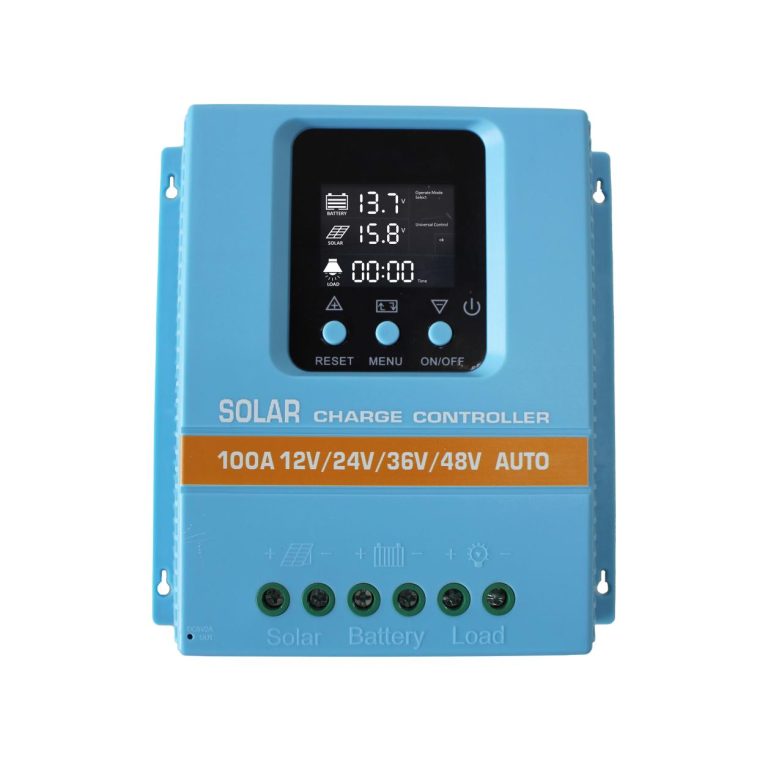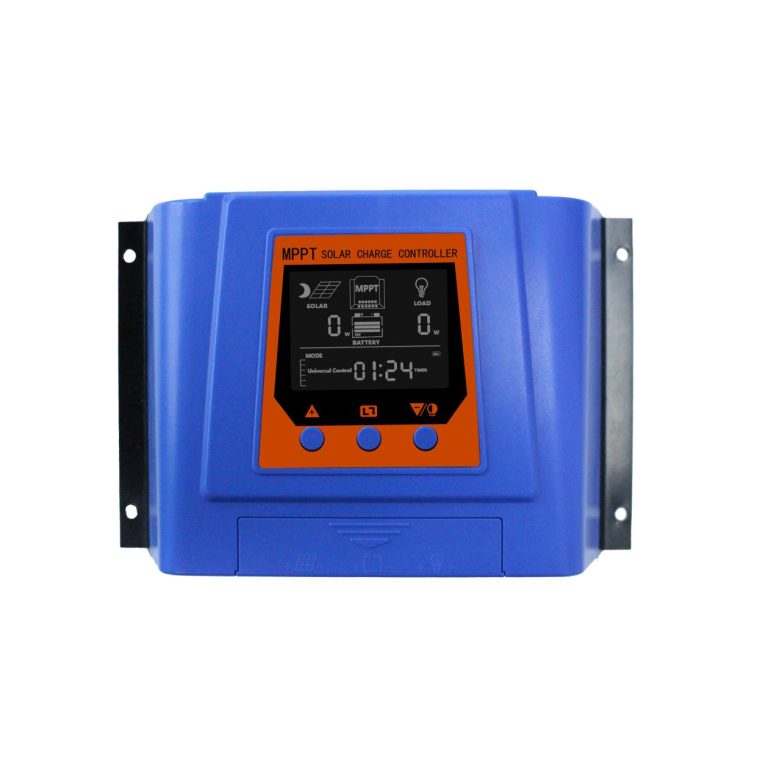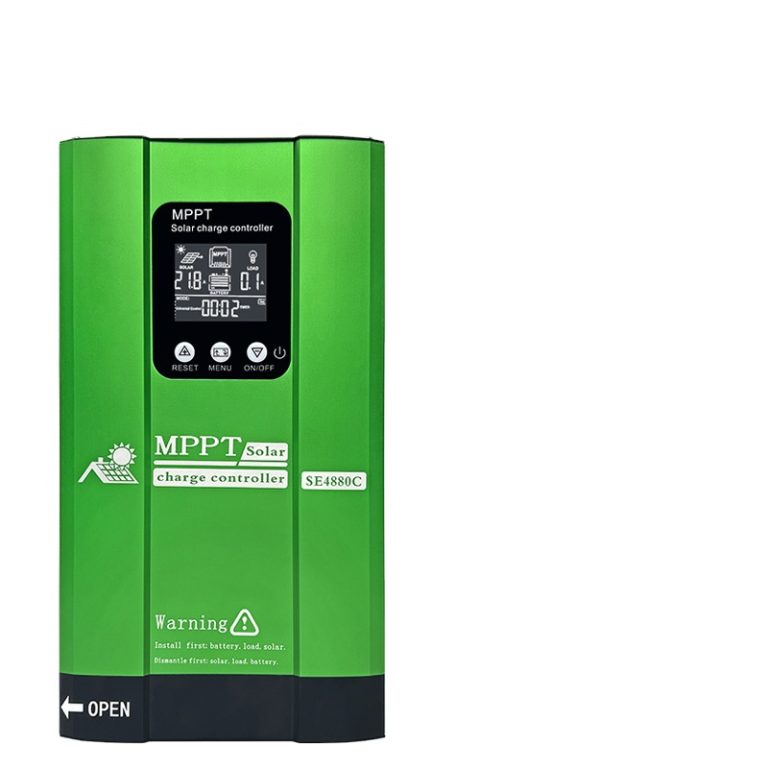
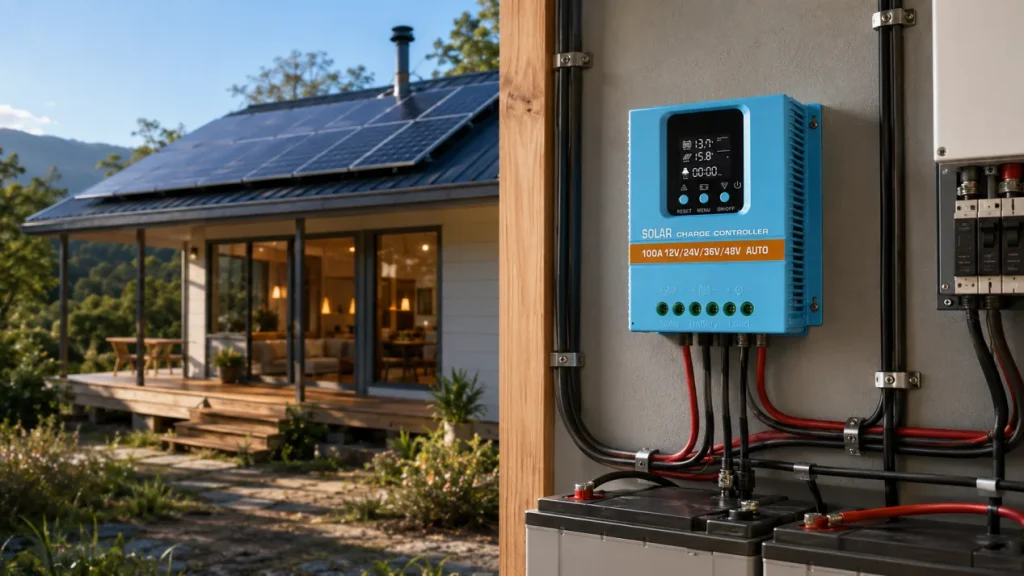
A residential solar backup system can provide practical support where utility power is unstable or unavailable for part of the day. This application example combines solar generation, controlled battery charging and DC-to-AC conversion to keep selected household equipment operating.
The installation image connects the equipment with a familiar home environment. Solar panels collect energy during daylight hours, while a solar charge controller manages charging to the battery bank. A power inverter then supplies AC electricity for the loads selected by the homeowner.
Application requirements
The system should be designed around essential loads rather than the total rating of every appliance in the property. Lighting, internet equipment, fans, televisions and small electronics normally have different operating times and starting requirements. Listing these loads first produces a more accurate inverter and battery recommendation.
Typical system configuration
- Solar panels selected for the available roof area and charging target
- A solar charge controller matched to panel voltage and battery voltage
- A battery bank sized for the expected backup duration
- A power inverter matched to continuous and starting loads
- Protection, cabling and distribution for the selected household circuits
Important product selection points
Solar panel open-circuit voltage must remain within the controller limit under local temperature conditions. Battery chemistry and charging settings should also be confirmed. For the inverter, buyers should check continuous power, surge power, output voltage and whether sensitive appliances require pure sine wave output.
The final arrangement depends on local electrical standards and should be reviewed by a qualified installer. Gerixi can help distributors and project buyers compare suitable solar charge controller and power inverter families after the basic system information is available.
Information to include with an inquiry
- Solar panel wattage and open-circuit voltage
- Battery voltage, chemistry and planned capacity
- Appliance list with estimated operating hours
- Required AC voltage, frequency and socket standard
Contact Gerixi with these details to discuss a suitable residential solar backup configuration.